THC Potency & Health Risks
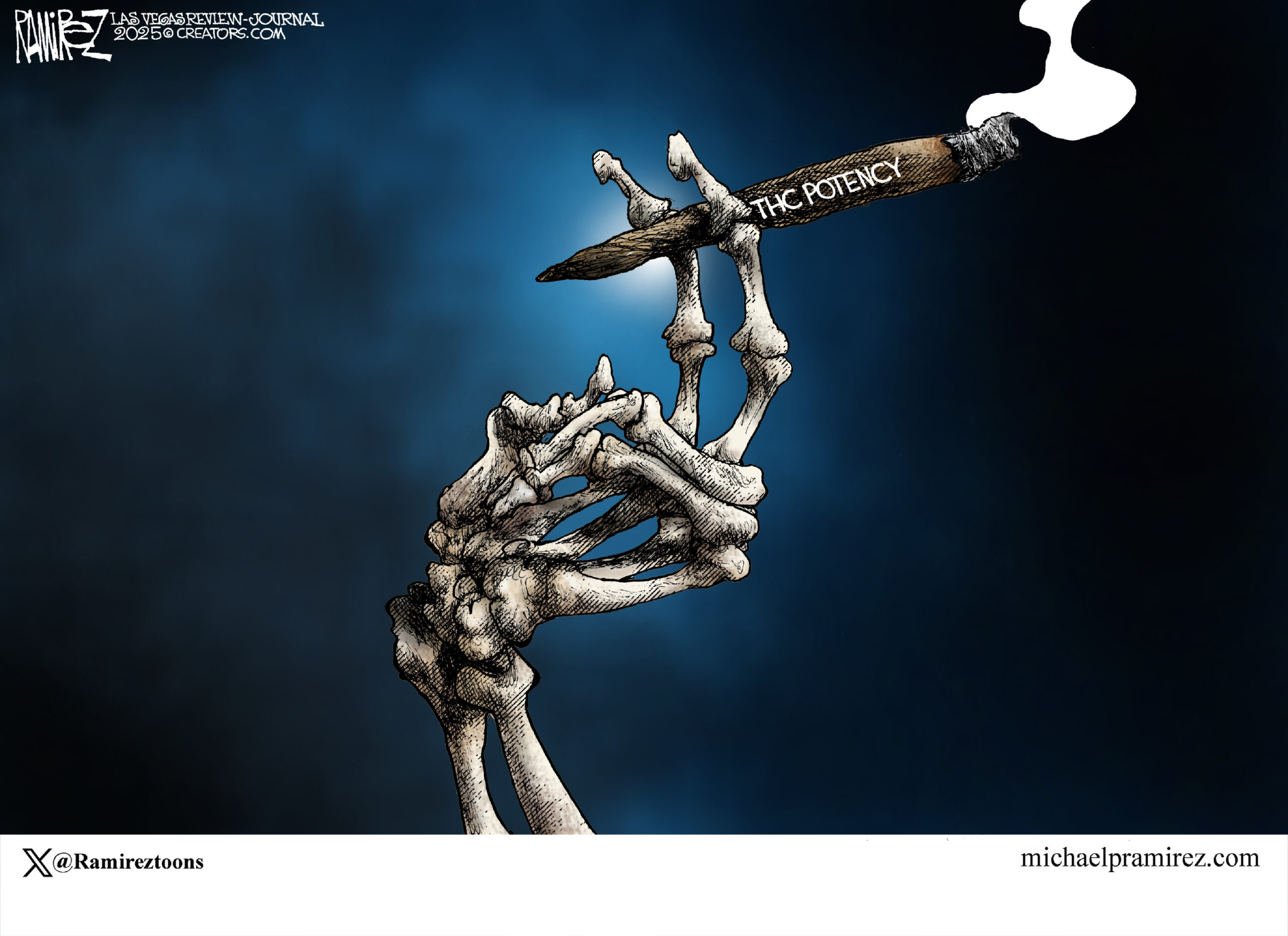
Published by the Atlanta Journal-Constitution, Georgia's largest newspaper. Photo used by permission of Michael Ramirez and Creators Syndicate, Inc.
Why THC Potency Matters
A nationally syndicated editorial cartoon published in December 2025 by the Atlanta Journal-Constitution, captures a reality that is too often missing from today’s marijuana policy discussions: the potency of today’s marijuana has increased dramatically, and that change carries real health risks.
The image, by a nationally syndicated, Pulitzer Prize–winning cartoonist, Michael P. Ramirez, visually underscores a basic but critical fact: this is not your grandmother’s weed anymore. In the 1990s, average THC levels hovered around 4 percent. Today, marijuana products commonly exceed 20 percent THC, with many far stronger — whether sold through medical programs, hemp-derived products, or the illicit market.
That increase in potency matters regardless of how marijuana is consumed. Higher-THC exposure is associated with increased risk of cannabis use disorder, cannabis-induced psychosis, and harm to adolescent brain development, which continues into the mid-20s. These risks are tied to THC itself, not to a specific product format.
While the cartoon depicts smoking a joint — which is not legal in Georgia — the image remains relevant. Various research shows that at least half of marijuana users still smoke or vape marijuana, even as edibles, beverages, and other products have become more common. The image reflects a familiar and still-prevalent form of use, but the central message is broader: as THC potency rises, so do the risks — no matter how marijuana is used.
Moved by the clarity of that message, Georgians for Responsible Marijuana Policy submitted the following Letter to the Editor to the Atlanta Journal-Constitution. Whether or not it is published, we believe this perspective deserves to be part of Georgia’s public conversation.

Letter to the Editor (submitted December 29, 2025)
I was struck by the powerful message conveyed in Michael P. Ramirez’s cartoon in the December 29 Atlanta Journal-Constitution. It visually underscores a fundamental fact: this is not your grandmother’s weed anymore. Modern marijuana is far more potent than it was just a generation ago. In the 1990s, average THC levels hovered around 4 percent; today, they commonly exceed 20 percent, with many products far stronger.
These potency increases matter because they are tied to real health risks. Higher-THC products are associated with increased rates of cannabis use disorder, cannabis-induced psychosis, and harm to teen brain development, which continues into the mid-20s. As potency rises, so does the likelihood of adverse outcomes — especially for youth.
From a policy standpoint, this deserves serious attention. Proposals to raise allowable THC in medical marijuana from 5 percent to as high as 50 percent are advancing without clear medical consensus, while intoxicating hemp products such as delta-8 remain widely available at similarly high potencies. These decisions affect not only individual users, but public health and public safety, as well as family stability and community well-being. When potency rises this sharply, thoughtful, evidence-informed policy is essential.
At Georgians for Responsible Marijuana Policy (GRMP), our focus is straightforward: as THC potency increases across all product types, policy must reflect the health realities that come with higher exposure.